


Inside the Orlando Convention Center, a room as vast as an airline hangar was bathed in green light from numerous two-story-high screens. Thousands of hematology researchers filled the space, waiting for a marquee lecture.
This was the Ernest Beutler Lecture and Prize session at the American Society of Hematology’s (ASH) 2025 annual meeting — one of hematology’s most prestigious honors. This year, the spotlight turned to two scientists whose work changed the course of myeloproliferative neoplasm (MPN) research forever.
Dr. Radek Skoda: From one mutation to a disease

Building a career at the intersection of biology and the clinic
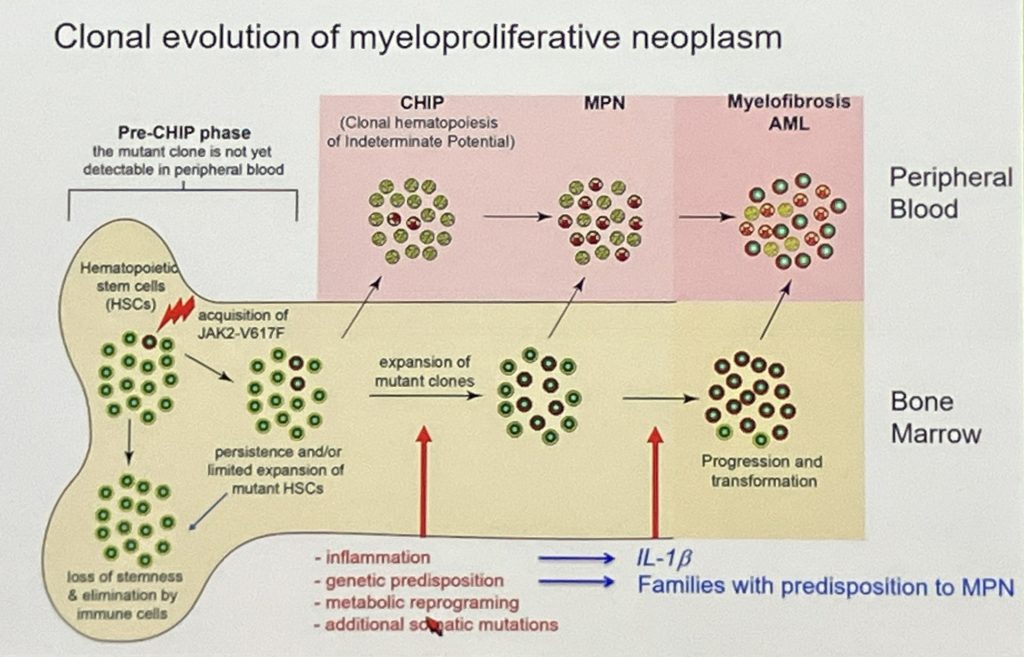
Dr. Radek Skoda, MD, has spent more than 2 decades uncovering how a single genetic alteration can drive the development of MPNs. His laboratory was among the first to show that the JAK2‑V617F mutation rewires signaling pathways within blood stem cells, giving these cells a growth advantage over normal counterparts. This discovery helped explain the origins of essential thrombocythemia, polycythemia vera, and myelofibrosis, and it laid the foundation for modern molecular diagnostics used across hematology today.
In his lecture, Skoda described how MPNs often begin with a single molecular mis-step: a blood stem cell acquiring the JAK2‑V617F mutation. Mutated cells called clones become hypersensitive to growth cues, allowing cells carrying the mutation to replicate and gradually expand their presence within the bone marrow. His research showed that this early, silent expansion, called clonal hematopoiesis, can precede symptoms by many years. Additional mutations and chronic inflammation accelerate clonal expansion and the transition toward full‑blown MPNs.
Skoda emphasized that understanding this stepwise evolution, from mutation to clonal expansion to symptomatic disease, is essential for predicting progression and identifying targets for early therapeutic intervention. His work underscores a central truth in cancer biology: even the most complex diseases can start with one small change.
Dr. Ruben Mesa: New therapies and what they mean for patients
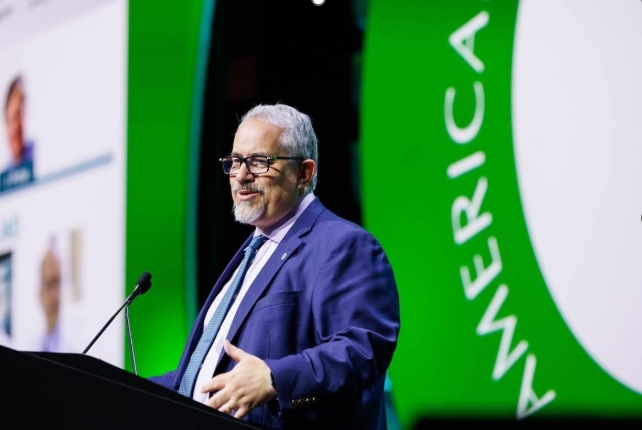
Building on Skoda’s decades of MPN molecular insights, the next presentation demonstrated how research translates into patient‑centered care and Dr. Ruben Mesa’s efforts to bring a voice and hope to patients living with these diseases. His career is defined by translating science into tangible benefits for patients.
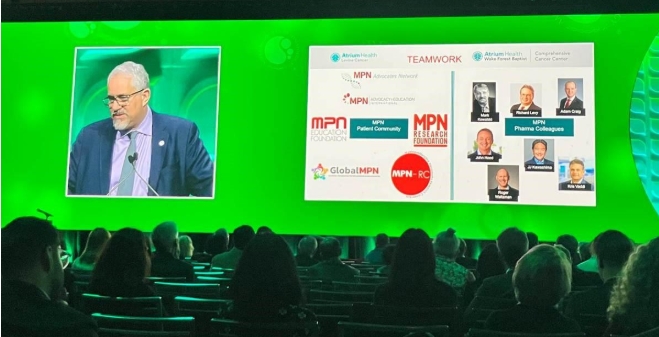
Mesa commanded the expansive auditorium, saying to his colleagues, “Ours is a team sport.” His commitment to collaboration and patient advocacy has made him a central figure in shaping modern care for these rare cancers.
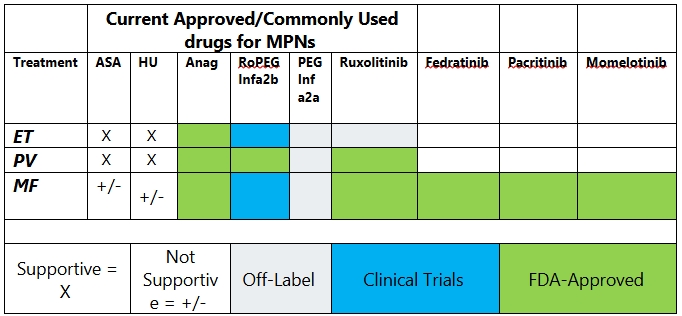
Mesa highlighted how clinical trials turned molecular insights into life-changing therapies. A major breakthrough came from a pivotal clinical trial he led that brought ruxolitinib to market. Ruxolitinib is a JAK inhibitor and the first therapy demonstrated to significantly reduce spleen size and ease debilitating symptoms in myelofibrosis. Since then, additional JAK inhibitor drugs — fedratinib, pacritinib, and momelotinib — have expanded options for patients with myelofibrosis and other MPNs.
Dr. Mesa placed special emphasis on the importance of listening to patients throughout their treatment journeys. Recognizing that patient experiences are central to evaluating therapeutic success, his leadership was instrumental in the development of patient-reported outcome tools. These resources ensure that medical advances translate into meaningful improvements in daily life for those living with myeloproliferative neoplasms (MPNs).
Among these innovations is the Myelofibrosis Symptom Assessment Form (MF-SAF), a tool designed to capture the real-world impact of treatments on patients’ quality of life, rather than focusing solely on laboratory results. Dr. Mesa and his team have ensured that patient perspectives guide every step of therapy evaluation and improvement.
Looking ahead, Dr. Mesa described promising developments in next-generation inhibitors and combination strategies. These approaches aim to slow disease progression and address complications, reflecting a commitment to comprehensive care. He also reminded the audience that scientific progress relies on collaboration — among researchers, clinicians, and patient advocates — underscoring that teamwork is essential for continued breakthroughs in the field.
Congratulations
The Ernest Beutler Prize is more than an award — it is a testament to partnership between basic and translational research and the power of science to change patients’ lives. Congratulations to Dr. Skoda and Dr. Mesa, and to the global network of scientists and advocates who made these advances possible. Their work offers hope for patients today and a roadmap for the breakthroughs of tomorrow.
