MPN PROGRESSion Registry™ Logo
MPN PROGRESSion Registry™ Portrait Reel

Let’s turn progression into progress

The MPN PROGRESSion Registry™ is a patient-focused research initiative that collects comprehensive, long-term, myeloproliferative neoplasm (MPN) patient health data.

The goal is to help scientists and clinicians:
      • Better understand the causes of MPN disease progression
      • Identify new patient treatments and care strategies
      • More accurately assess how well treatments are working
      • Ultimately, find a cure

MPN PROGRESSion Registry™ arrows

Already enrolled? Log in

If you are a patient 18 and older, living in the United States, who has ever been diagnosed with an MPN, you can enroll and contribute information about your patient experiences over time. Participation is easy, secure, requires minimal time commitment — and sharing your data can help impact future MPN research!

What is MPN progression?

Myeloproliferative neoplasms (MPNs) are rare blood cancers that include essential thrombocythemia (ET), polycythemia vera (PV), and myelofibrosis (MF). These MPNs can progress over time into more aggressive forms of the disease, or, more rarely, to secondary acute myeloid leukemia (AML). Progression is a major concern for MPN patients, and a priority area of focus for researchers.

Curious about other research terms? Visit our MPN PROGRESSion Glossary.

How does
participation work?

drop1

Enroll online, designate your care center & consent to share your electronic medical records — it’s fast and easy

drop2

The system automatically, and securely, pulls your records into the study, withmore types of data added over time

drop3

Log in to your portal to answer regular surveys about your MPN journey & view your records all in one place

drop4

Only de-identified, anonymous data is shared with pre-screened, approved MPN research projects and researchers

Are you an MPN patient living in the U.S.?

Learn more about the enrollment and informed consent process by watching this helpful video with MPN PROGRESSion Registry Lead PI, Dr. Raajit Rampal. 

At this time, only patients living in the United States are eligible to participate.

To ensure we meet US-based regulatory requirements, data privacy laws, and research compliance standards, we are currently limiting enrollment to US residents. We hope to be able to open the MPN PROGRESSion Registry to additional countries in the future.

arrowsblue

Participate in the next generation of MPN research progress.​

Together, individual drops of data can make an ocean of change.

Designed to keep your data anonymous & secure

The MPN PROGRESSion Registry system:

lockicon
    • Securely stores and protects any health information you share
    • Meets strict HIPAA medical privacy laws
    • Meets National Institutes of Health (NIH) standards for privacy & confidentiality
    • Is reviewed and approved annually by an Institutional Review Board (IRB), an independent, trusted, institutional review and ethics board that ensures research is conducted safely and patients’ rights are protected
    • Keeps your personal information separate from your health data


None of your identifying information will be used for research
 — only anonymous data, without your name or personal details, will be shared with carefully approved research teams. Patients own their health records and consent to how they are used.

Why studying MPN progression is critical to your care

We still have a lot to learn about how and why MPNs progress.

Existing data is limited, often hard to access, or is missing key details.

MPNPROGRESSionRegistry WhyStudyIcon1

Many questions remain about why some patients’ conditions progress rapidly, while others remain stable.

MPNPROGRESSionRegistry WhyStudyIcon2

MPNs are complex and can be unpredictable. No two patients’ experiences are exactly alike.


MPNPROGRESSionRegistry WhyStudyIcon3

Researchers and clinicians still need clear, widely accepted definitions or biomarkers to mark when one MPN subtype evolves to another.

MPNPROGRESSionRegistry WhyStudyIcon4

MPN industry and biopharmaceutical partners need better data to help meet your needs as a patient — and to develop better treatment options.

MPNPROGRESSionRegistry WhyStudyIcon5

A large collection of MPN data over many years can help researchers better see trends and patterns — which can help aid new discoveries.

What is patient ‘health data’?

Data illustration

Patient health data can encompass a variety of things. It can include electronic medical records (EMR), which are a patient’s digitally stored medical information over time, information noted in your records by your doctor’s office, clinics or hospitals, as well as information you provide about your health and wellness at any given time. Health data can include details such as diagnoses, test results, medications, vital signs, treatment plans, visit notes, and imaging reports, as well as administrative information like demographics and immunization history. 

For the MPN PROGRESSion Registry, the health data collected will come from each participant’s EMR, including demographics, medical history, MPN type, related blood test results, additional information about associated conditions such as heart disease and blood clots, laboratory data for diagnostic tests, and medications. The collected health data will also include information you regularly provide the MPN PROGRESSion Registry via surveys, short answers, and other scored questions, such as the MPN-10

MPN PROGRESSion Registry Branding Stripes

Frequently asked questions (FAQs)

The MPN PROGRESSion Registry™ is a patient-centric research initiative, designed to help provide better understanding of myeloproliferative neoplasms (MPNs) — a group of rare blood cancers that include polycythemia vera (PV), essential thrombocythemia (ET), and myelofibrosis (MF). These MPNs can progress into a more aggressive form of the disease over time or ultimately transform into secondary Acute Myeloid Leukemia (sAML). As a result, progression and its causes are a major concern for MPN patients, and a priority area of focus for researchers.

The MPN PROGRESSion Registry will track patient health records, genetic tests, treatments, and patient experiences over the next 5 to 10 years — striving to become the most comprehensive, longest-term collection of MPN patient health data in the United States — to answer a critical question: Why do MPNs progress, and what can we do to slow, stop, or reverse that progression?

By bringing together patients, doctors, researchers, and industry experts, the MPN PROGRESSion Registry aims to help the MPN community:

  • Understand the risk factors and causes of MPN disease progression
  • Determine new ways to define, measure, and track progression of MPNs
  • Improve treatments to help MPN patients live healthier, longer lives
  • Provide insights to help personalize care
  • Ultimately, discover ways to predict or reverse disease changes

Many patients living with MPNs often worry about if, when, and how their disease will progress. Unfortunately, we still have a lot to learn about MPN disease progression. The current information and data available can be hard for researchers to access, not widely applicable from patient to patient, and is often missing key information specific to MPNs.

MPNs are complex diseases. They can be unpredictable, with no two patients’ experiences being exactly alike. Many questions remain unanswered as to why some patients’ conditions progress rapidly, while others remain stable. The MPN PROGRESSion Registry™ will collect extensive data to help researchers, clinicians, and the pharmaceutical industry:

  • Discover what indicates progression — before it happens
  • Better understand the different paths MPN diseases can take
  • Provide a comprehensive resource that can be studied to gain actionable insights — and be put into practice to improve overall patient care
  • Determine and agree to a widely accepted consensus, on:
      • What the defined stages of progression are
      • The biomarkers that define the start and end of each stage
  • Apply the best available therapeutics on an individualized basis
  • Eventually, help identify the specific risk factors for progression — and help find a cure

The MPN PROGRESSion Registry stands out due to its scale, wide-reaching goals, and patient-centered approach:

  • Knowledge insights: Aims to improve disease understanding and address challenges in the field of MPN progression
  • Large scale with with a years-long approach: Designed to be the largest MPN registry in the United States, aiming to enroll thousands of patients in a long-term initiative that will follow participants for 5 to 10 years
  • Useful & comprehensive data: Widespread collection of data from medical records, genetic tests, patient-reported outcomes, and potentially more to maximize study outcomes.
  • Broad representation: Participants will come from various locations, demographics, and backgrounds, and will include patients from across the spectrum of MPN diseases. This will ensure that the data reflects diverse patient biology and experiences.
  • Actionable: Designed to deliver early insights into the patient journey, as well as improve understanding over the long term.
  • Ease of enrollment & use: Sign-up is straightforward, and ongoing participation is easy for patients wishing to enroll.
  • Trusted: The registry was created by the MPN Research Foundation, and built by the experts at IQVIA, a global leader in patient registry technologies. There is rigorous oversight, and all data is highly confidential and secure.
  • Goodwill: Patients can feel good being part of this exciting project and community.

The MPN PROGRESSion Registry has been meticulously developed by MPN Research Foundation over a number of years, in collaboration with MPN patients, and leading scientific, research, and registry development experts. By incorporating best practices in data collection and analysis, the Registry is designed to yield reliable and impactful results.

The need and idea for a registry centered around MPN disease progression originated in meetings of the MPN Research Foundation Progression Research Network. In response, MPNRF began working to bring an MPN patient registry to life.

The MPN PROGRESSion Registry has been thoughtfully designed
During development, a feasibility study was conducted to assess and confirm the project’s viability and identify any possible roadblocks to long-term success. The study’s findings are detailed in this collaborative whitepaper and comprehensive report published by the MPN Research Foundation and IQVIA.

There is a planned, phased design for expanding the types of data included in the MPN PROGRESSion Registry over time. Each year of the study, additional and more complex data sets will be incorporated. This approach will enable greater impact, by delivering early insights while still expanding over time to meet larger, longer-term objectives.

The MPN PROGRESSion Registry is also structured to allow for continual improvement. It will regularly draw on participant insights and expert guidance to ensure it remains in line with cutting-edge research needs and priorities in the future.

The MPN PROGRESSion Registry™ has an advisory Registry Steering Committee that provides input and oversight. The committee includes leading MPN specialists and other renowned researchers. Their expertise and guidance ensure the Registry’s design and analysis meet the highest scientific standards.

The MPN PROGRESSion Registry Steering Committee is:

  • Raajit Rampal, MD, PhD – Director, Myeloproliferative Neoplasms Program at Memorial Sloan Kettering Cancer Center (Lead-PI)
  • Doug Tremblay, MD – Assistant Professor of Medicine at Ichan School of Medicine at Mount Sinai (Co-PI)
  • Jan Bewersdorf, MD, FACP – Assistant Professor of Medicine at Yale University (Co-PI)
  • Gaith Abu-Zeinah, MD – New York-Presbyterian of Weill Cornell Medicine
  • Sibel Blau, MD – Medical Director at Northwest Medical Specialties and President of Quality Cancer Care Alliance Network (QCCA)
  • Andriy Derkach, PhD – Assistant Attending Biostatistician at MSKCC (Statistician)
  • Mithat Gönen, PhD – Chief, Biostatistics Service at MSKCC (Statistician)
  • Michael Grunwald, MD, FACP – Chief, Leukemia Division at Atrium Health
  • Claire Harrison, MD, DM, FRCP, FRCPath – Professor of Hematology at Guy’s and St. Thomas’ NHS Foundation Trust, London, UK
  • Andrew Kuykendall, MD – Moffitt Cancer Center
  • Jeanne M. Palmer, MD – Vice Chair and Section Chief for Hematology at Mayo Clinic
  • Tyler Parsons, PhD – Postdoctoral Research Fellow at Washington University School of Medicine in St. Louis
  • Anand Patel, MD – Assistant Professor of Medicine at UChicago Medicine
  • Robyn Shapiro, JD – Lawyer/Bioethicist at Health Sciences Law Group
  • David Shoultz, PhD, MBA – Chief Scientific Officer at MPN Research Foundation
  • Shireen Sirhan, MD – Assistant Professor, Oncology at Jewish General Hospital
  • Kapila Viges – Chief Executive Officer at MPN Research Foundation

The MPN PROGRESSion Registry is entirely funded by the MPN Research Foundation, making participation completely free. Additional support is provided by individual donors, foundations, corporations, pharmaceutical companies, or other collaborative sponsors and partners.

The MPN PROGRESSion Registry™ is a team effort, involving expert organizations dedicated to improving care and research for people living with myeloproliferative neoplasms (MPNs). The key development partners are:

IQVIA
IQVIA built and manages the Registry patient and data portal. IQVIA is a global leader in healthcare technology and data solutions, with years of experience creating tools like patient registries to help researchers uncover valuable insights and advance medical research.

Sobi
Sobi is a biopharmaceutical company that works to improve the lives of people with rare diseases, including MPNs. Their partnership provides primary funding and expert support to help the Registry succeed. Sobi brings valuable industry knowledge and resources to this project, and their focus on rare diseases makes them a great fit for this important work.

Karyopharm
Karyopharm Therapeutics Inc. is a commercial-stage pharmaceutical company dedicated to pioneering novel cancer therapies. Their primary focus is on developing novel drugs which they hope will help treat patients with certain blood cancers or solid tumors. Karyopharm’s core technology leverages the inhibition of nuclear export as a mechanism to treat patients. Their partnership contributes both financial support and specialized knowledge to the Registry efforts.

GSK
GSK is a focused biopharma company working to prevent and treat disease with specialty medicines, vaccines and general medicines. They focus on the science of the immune system and advanced technologies, investing in four core therapeutic areas — respiratory, immunology and inflammation; oncology; HIV; and infectious diseases — to impact health at scale. Their partnership contributes both financial support and specialized knowledge to the Registry efforts.

MPN disease progression, or MPN progression, is the transformation over time of a myeloproliferative neoplasm (MPN) into a more aggressive form of the current disease, another MPN (PV, ET, MF), or, more rarely, to secondary acute myeloid leukemia (sAML) — which can lead to increased complications, disease symptoms, and generally poorer overall prognosis.

As a result, progression and its causes are a major concern for MPN patients, and a priority area of focus for researchers.

The word “progression” can feel intimidating but understanding how progression happens is our best chance at discovering meaningful intervention. By focusing on progression, we hope to learn enough to:

  • Detect it early: Recognize changes in symptoms, labs, or genetic markers.
  • Improve treatments: Help doctors intervene sooner and more effectively.
  • Empower patients: Knowledge can make MPN progression feel less intimidating and allows patients to take more control of their care.


By reframing progression as an opportunity for action, the MPN PROGRESSion Registry can inspire the focused effort to uncover better treatments and result in more informed care decisions.

The MPN PROGRESSion Registry strives to revolutionize MPN research by:

  • Identifying the biomarkers for who will progress and why (e.g., by which mechanisms).
  • Supporting the development of new therapies aimed at slowing or stopping progression.
  • Spotting early signs of progression through detailed analysis of blood tests, symptoms, and genetic data, offering researchers a more nuanced understanding of disease progression.
  • Uncovering real-world challenges like care disparities and comorbidities
  • Utilizing robust patient data to enable personalized treatment plans
  • Identifying long-term patterns and trends that often only emerge from research that can be conducted over many years

All patients who have ever had a diagnosis of ET, PV, MF, or other rare MPNs*, are 18 and over, and live in the United States, are encouraged to enroll in the MPN PROGRESSion Registry.

Participants must have a confirmed diagnosis of pre-fibrotic primary myelofibrosis (pre-pMF), primary myelofibrosis (MF/pMF), secondary myelofibrosis (sMF), polycythemia vera (PV), essential thrombocythemia (ET), MPN-unclassifiable (MPN-U), MPN-accelerated phase (MPN-AP), or MPN-blast phase (MPN-BP) per WHO 2022 criteria.

Each unique patient experience provides invaluable insights that can drive research and improve care. Patients from diverse backgrounds, locations, and care settings are encouraged to participate, as their involvement enriches the dataset and strengthens the research outcomes. By sharing your health data over time, you become part of the solution.

Patients enroll online, provide permission to share their electronic medical records (EMR), and designate their care center(s). The secure MPN PROGRESSion Registry platform automatically and securely pulls records in. Patients can log in and answer regular surveys about their health and symptoms to supply additional information about their MPN journey. More types of data will be added to the MPN PROGRESSion Registry over time. Once enough data has been collected to meet requirements for statistical significance, it will be shared only with pre-screened, trusted research projects.

All data is stored securely and used solely for approved research purposes. Any and all data shared with researchers will be de-identified and anonymous — all personal patient information such as name, age and location is removed.

At this time, only patients living in the U.S. are eligible to participate. This limitation ensures we meet U.S.-based regulatory requirements, data privacy laws, and research compliance standards. We hope to be able to open the Registry to individuals outside the U.S. in the future.

Yes — many patients who are in clinical trials can also join the MPN PROGRESSion Registry™. Being in a clinical trial does not automatically exclude you from participating. However, some trials may have restrictions, so it’s a good idea to check with your clinical trial team before enrolling in the Registry.

If you’re unsure, you can also reach out to the Registry support team for help.

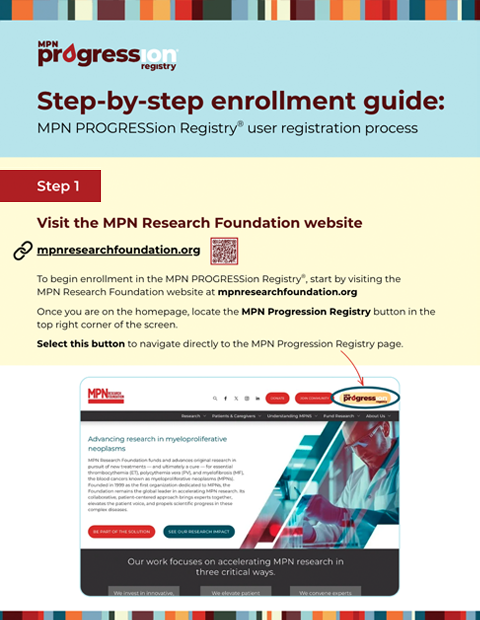
You will be asked to sign up as an MPN PROGRESSion Registry™ participant through a simple, secure online portal. During enrollment, you’ll provide consent to share your electronic health records and select all of your care centers.

After you enroll, you may see short surveys or modules on your homepage asking about your MPN journey and health experiences. Some surveys will appear every 3 months, while others may be sent every 6 months — depending on the type of information we’re gathering. You’ll receive a notification each time an update is available, and all activities are designed to be quick and easy to complete at your convenience.

Your privacy is always protected: your name and identifying details are separated from your clinical and survey data before any information is shared with researchers.

It’s easy to sign up!
You enroll through a simple, online portal and provide consent to securely share your medical records. You will receive clear instructions and support throughout the enrollment process. Nothing is required from your doctor for you to enroll.

Participants will also receive periodic communications with additional patient activities and surveys to complete, Registry updates, and information on research outcomes to help you understand how your data is contributing to the advancement of MPN and progression understanding.

Ready to get started?
=> Navigate to top of this the MPN PROGRESSion Registry informational page and click the ‘enroll now’ button to complete the simple form. You will then be directed to the secure MPN PROGRESSion Registry™ portal to complete your registration, and click on “Informed Consent” to review and sign the documents online.

If you have any difficulties with the registration process, contact us via email for assistance.

Congratulations on the success of your bone marrow transplant! We encourage all prior MPN patients to participate by sharing your data and experiences from your MPN journey. Your health history will provide incredibly important insights and understanding on how or why you reached the stage of needing a transplant and even what the post-transplant information can inform.

If you’ve received care for your MPN at more than one medical center or clinic, we encourage you to share records from all of those locations. This helps give researchers a more complete picture of your health journey, which is especially important for understanding how MPNs progress and how treatments may differ between providers.

Even if these hospitals or clinics use the same online patient system (like MyChart), each location usually manages its medical records separately. That means you’ll need to identify each individual care center when enrolling — even if they’re part of the same health system or use the same login.

During enrollment, the MPN PROGRESSion Registry™ portal will guide you through this step, and you can contact the MPN Research Foundation if you need help listing your care locations.

If you start seeing a new doctor or begin receiving care at a different hospital or clinic during the study, that’s completely okay. To help keep your information up to date, we encourage you to log in to the MPN PROGRESSion Registry™ portal and add the new care location.

Even if the new provider uses the same patient portal system (like MyChart), each clinic usually manages its own records separately — so it’s important to list each one.

Keeping your care team list current helps the Registry collect the most complete information possible about your MPN journey. If you’re not sure how to update your care centers, the MPN PROGRESSion Registry support team can help.

PROGRESS over progression
The data gathered and studied from the MPN PROGRESSion Registry™ will help researchers look at MPN disease progression trends over time across thousands of patients. This long-term perspective can help to provide scientists with a wealth of knowledge to better understand progression, improve care, and eventually develop cures for MPNs.

Unique opportunity to contribute to research outcomes
A major focus of the MPN PROGRESSion Registry is determining risk factors for disease progression in patients with MPNs. One long-term aim is that the data collected will be robust enough to assist researchers in not only identifying patients at risk for MPN progression but also aiding in the development of therapies that delay or inhibit disease progression.

Your participation provides an exciting and unique opportunity to be a citizen scientist and help contribute to the expansion of scientific knowledge. Sharing your health journey over time is your chance to give back to the MPN community and help impact long-term MPN research outcomes.

Your individual journey matters
Your individual journey and unique disease data are a key part of the solution to learning more. Since this is a direct-to-patient Registry, it allows patients, rather than doctors or researchers, to provide information about their MPN experiences. This approach provides a larger, more personal picture of how MPNs impact the lives of patients.

Together, individual drops of data can make an ocean of change. There is power in numbers, and we need everyone eligible to contribute and provide as much data as possible. The more information gathered by the Registry, the more comprehensive, diverse, and statistically significant the data will be — and the more we can learn.

Easy, trusted & secure
Joining is easy and secure. Patients can enroll through a simple, online portal with clear instructions and support throughout the process.

The MPN PROGRESSion Registry can be trusted by patients and researchers:

  • It was methodically developed and built over a number of years by MPN Research Foundation and the experts at IQVIA, with oversight from scientific advisors and an Institutional Review Board (IRB).  
  • All data is highly secure, HIPAA compliant, and meets the National Institutes of Health (NIH) standards for privacy and confidentiality.  
  • No identifying information will ever leave the Registry — only anonymized information (where your name and other identifying personal details are removed from the rest of the data being studied) will be shared with any researchers or biopharmaceutical industry partners.


The power of connected data

With your permission, your electronic medical records (EMR) — including lab results, diagnoses, treatments, and clinic notes — will be securely connected and integrated into the Registry database from the sources that you designate. This is not unlike the process that is followed to securely link sources of financial information (e.g., connecting your bank account with a mortgage company) using a third-party service provider.

In future years, participants may also be able to view summary reports providing insights from across the MPN PROGRESSion Registry population, created using de-identified, aggregate data. These types of reports could include trends in symptoms, treatments, or outcomes among patients with similar MPN types.

When you join the MPN PROGRESSion Registry, you will be asked to:

  • Share your health information: You will allow the Registry to collect information from your electronic health records over time, as well as data you choose to share directly about your health experiences.
  • Provide updates over time: Because this study aims to learn as much as possible about MPN diseases and progression over time, as a participant, you’ll be asked to periodically provide updates about your health. This may involve filling out short questionnaires or contributing new information as your condition changes. Updates will typically be requested every few months but are designed to be time-efficient and fit your schedule.
  • Be contacted by researchers about future studies: This may include observational studies, surveys, or clinical trials. The MPN Research Foundation will not contact you directly. However, researchers who access de-identified Registry data may request permission to reach out to eligible participants. Taking part in any additional research is always voluntary and would require separate consent. 
  • Maintain your participation: Your involvement is ongoing but completely voluntary. You can decide to withdraw from the Registry at any time.
  • Support research without additional costs: There are no financial costs or obligations tied to your participation. The Registry is funded by the MPN Research Foundation, and your contribution is focused on providing data and advancing knowledge and care for MPNs.

Your time commitment is minimal. The MPN PROGRESSion Registry™ is designed to easily and efficiently collect information. Initial enrollment is designed to take no more than an hour. Over time, most participants will only need to spend a few minutes providing updates every few months.

Yes! As a participant in the MPN PROGRESSion Registry™, you will receive regular updates and reminders to help you stay informed and engaged. These communications may include: 

  • Updates on Registry news, research progress, and how your participation is making a difference
  • Reminders to complete surveys or keep your health data up to date
  • Opportunities to engage with researchers or learn about ongoing studies
  • Access to your personal Registry portal


Note: Medical records shared with the Registry are not visible in your portal account, but they are securely and anonymously used by
pre-approved researchers to better understand MPN progression.
 

As a thank-you for your time and effort as a participant in the MPN PROGRESSion Registry™, you will be eligible for a raffle twice each year. Winners will be selected at random, and participation in the raffle is optional. While compensation is not guaranteed, the raffle offers a small way to recognize and appreciate the valuable contributions you are making as a participant toward advancing MPN research and improving care for the community.

Yes. You may withdraw from the MPN PROGRESSion Registry™ at any time, and no new data will be collected after you withdraw. Previously collected data may continue to be used for research, unless you specifically request that it be removed, and such removal is permitted by applicable laws and research guidelines.

If you choose to withdraw and want your data removed, you can contact the Registry team to make that request, and we will review it in accordance with applicable requirements.

Your decision to withdraw will not affect your relationship with the Registry, the MPN Research Foundation, or your medical care in any way.

Want to help spread the word about the MPN PROGRESSion Registry?

  • Download shareable information here
  • Contact us to learn more and for additional resources
  • Share about the MPN PROGRESSion Registry™ on your social media, with easy-to-use items in our social media resource kit
  • Tell your MPN providers about the MPN PROGRESSion Registry and share the provider toolkit with them

Data collected in the MPN PROGRESSion Registry will come from each patient’s electronic medical records (EMR), including demographics, medical history, MPN type, related blood test results, additional information about associated conditions such as heart disease and blood clots, laboratory data for diagnostic tests, and medications. The collected health data will also include information you regularly provide the MPN PROGRESSion Registry via surveys, short answers, and other scored questions, such as the MPN-10.

Yes. The MPN PROGRESSion Registry™ is committed to protecting your privacy and ensuring your data is secure.

The system is highly secure, complies with all relevant privacy laws, including HIPAA, and meets all National Institutes of Health (NIH) standards for privacy and confidentiality. It is reviewed and approved annually by an independent, trusted, institutional review and ethics board — an Institutional Review Board (IRB) — that ensures research is conducted safely and protects patient rights. Learn more about the IRB for the MPN PROGRESSion Registry, WCG Clinical.

Your name and other identifying personal information will never be shared with researchers or industry partners — only anonymous information will be be used for approved research purposes.

Participation is completely voluntary, and you may withdraw from the MPN PROGRESSion Registry at any time. If you choose to opt out, no new data will be collected, and you may also request that your previously collected data be removed — where permitted by law and research guidelines.

This approach ensures your information stays protected and gives you control over how your data is used.

To protect your privacy, identifying information — such as your name, date of birth, and contact details — is kept strictly separate from your medical records and survey responses. Only one designated individual, called an Honest Broker, has access to this identifying information to help manage and secure the data.

MPN Research Foundation does not have access to any identifiable patient data. All information shared with the Foundation is fully de-identified and aggregated, meaning your identity is never attached.

The MPN PROGRESSion Registry is managed by IQVIA, a trusted healthcare technology partner, using HIPAA-compliant systems and strict access controls. The entire system is reviewed and overseen by WCG, an independent Institutional Review Board (IRB), to ensure your privacy is protected and your data is used only for approved research.

Researchers will use data collected from the MPN PROGRESSion Registry™ for a wide range of MPN-related studies, such as: 

  • Symptoms: Changes in fatigue, blood counts, or spleen size
  • Common complications and frequency of phlebotomy, transfusion, clotting, and bleeding events
  • Treatment outcomes: How different therapies affect progression and quality of life
  • Genetic factors: Mutations in genes such as JAK2, CALR, MPL, and others that researchers believe may influence MPN progression

The MPN PROGRESSion Registry™ is committed to ensuring participant safety, privacy, and compliance with the highest ethical and scientific standards through the following:

  • Central IRB oversight: The MPN PROGRESSion Registry is reviewed and approved by an Institutional Review Board (IRB), an independent, trusted institutional review and ethics board (WCG Clinical) that ensures research is conducted safely, protects patient rights, and maintains privacy while supporting high-quality research
  • Ongoing monitoring: The IRB conducts regular reviews to ensure compliance with protocols and address any updates, such as changes to consent forms or procedures
  • Data privacy and security: Participant data is de-identified, securely stored, and protected under strict privacy laws, including HIPAA. Access to identifying details is encrypted and limited to authorized personnel
  • Registry Steering Committee: A steering committee, made up of independent, scientific advisors and experts, oversees MPN PROGRESSion Registry governance to ensure transparency, ethical integrity, and alignment with regulatory standards
  • Patient Engagement Advisory Committee (PEAC): A group of MPN patients, caregivers, and advocates who advise on the design and governance of the MPN PROGRESSion Registry. They ensure patient-facing materials are clear and inclusive, and that patient voices shape engagement, research, and outreach efforts. One PEAC member also serves on the Registry Steering Committee to ensure strong patient representation in decision-making
  • Data Access, Use, and Publication Committee (DAUP Committee): A group of experts that helps ensure MPN PROGRESSion Registry data are used safely, ethically, and in line with what participants agreed to when they joined the study. They review requests from researchers who want to use the data and provide advice about privacy, fairness, and scientific quality. This committee also helps review research papers and publications that come from the Registry. Final decisions are made by the Registry’s leadership team, using the DAUP Commitee’s input and recommendations 

When you join the MPN PROGRESSion Registry, you’ll contribute information in two ways:

  1. Your electronic health records (EHR):
    • With your permission, the Registry will securely access your health records from your care providers
    • This includes things like your diagnosis, blood counts, test results, treatments, and related health history
  2. Surveys you complete through the portal:
    • You’ll be invited to answer brief questionnaires about your symptoms, quality of life, and MPN experience
    • Some will be sent every few months, and you’ll get a notification when they’re ready


You choose what to share. Participation is voluntary, and you can stop at any time.
 

Accuracy matters. The more complete your data, the more helpful it is for understanding MPN progression and improving care. 

Your data is private and secure. Everything you share is encrypted, stored in HIPAA-compliant systems, and only used for approved research. 

Your data is part of the solution

Your MPN journey. Your chance to make an impact.

HAVE QUESTIONS OR NEED HELP?

Send us an email or call 773-977-7216, and we will get back to you within two business days to provide assistance.

Thank you to our MPN PROGRESSion Registry sponsors

Foundational sponsor